
Learning English has become less about passing exams and more about communicating confidently in everyday situations. Whether you’re preparing for job interviews, aiming for a promotion, planning to study abroad, or simply trying to become more fluent, choosing the right learning format is the first decision you’ll make.
A quick online search presents hundreds of options. Some promise fluency in just a few weeks, while others claim classroom learning is the only effective method. The truth is more balanced. Both online and offline English speaking courses have clear advantages, but the better choice depends on your learning style, schedule, and goals.
This guide compares both formats honestly so you can invest your time and money wisely instead of following marketing claims.
Why English Speaking Skills Matter
English has become the common language across multinational companies, universities, customer service, technology, hospitality, and international business.
Strong communication skills can help you:
- Perform confidently during interviews.
- Communicate with international clients.
- Participate actively in meetings.
- Improve presentation skills.
- Access global educational opportunities.
Learning grammar is valuable, but speaking confidently requires regular practice in real conversations.
What Are Online English Speaking Courses?
Online courses allow students to learn through live virtual classes, recorded lessons, mobile applications, and digital practice sessions.
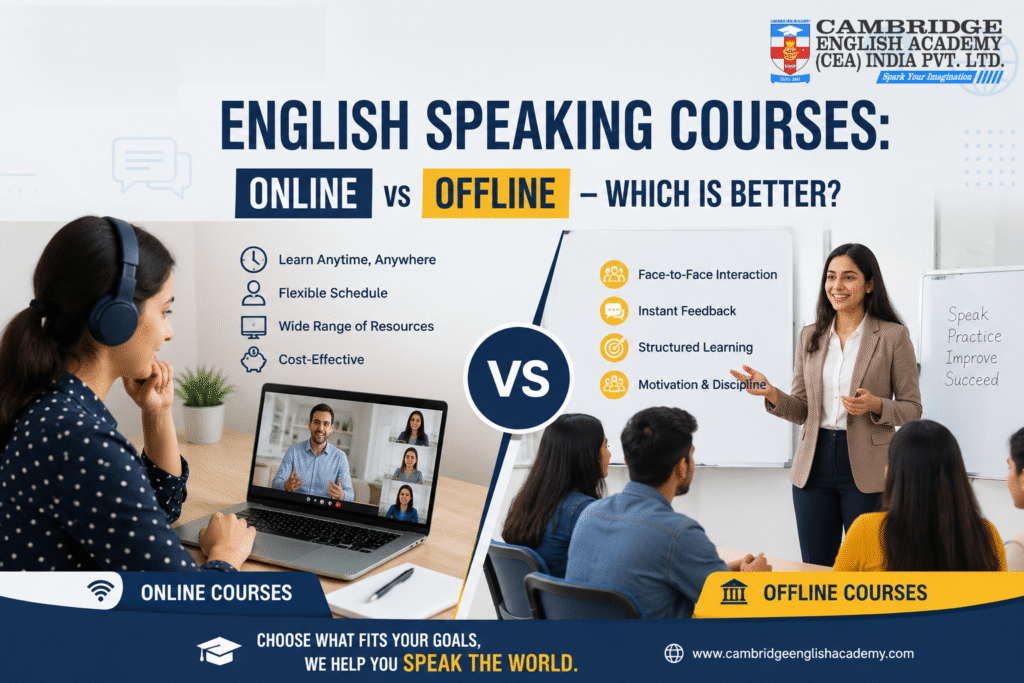
Advantages
- Learn from home.
- Flexible class timings.
- Easy access for working professionals.
- Recorded sessions for revision.
- Often more affordable.
Challenges
Learning online demands self-discipline. Students who skip speaking practice or hesitate to participate during live sessions often progress more slowly.
What Are Offline English Speaking Courses?
Offline courses take place in a physical classroom where students interact directly with trainers and classmates.
Advantages
- Face-to-face communication.
- Immediate correction of pronunciation.
- Better classroom discussions.
- Higher accountability.
- Strong peer interaction.
Challenges
Students must travel regularly and follow fixed schedules, which may not suit everyone.
Online vs Offline English Speaking Courses
Flexibility
Online learning wins when flexibility is the priority. Students can attend classes from almost anywhere.
Offline learning works better for those who prefer structured routines.
Speaking Practice
Offline classrooms naturally encourage spontaneous conversations through discussions, role plays, and group activities.
Online courses can also provide speaking practice, but students need to participate actively rather than staying silent during sessions.
Trainer Interaction
Both formats offer expert guidance, but classroom interaction often feels more personal because trainers can immediately observe body language, pronunciation, and confidence levels.
Learning Environment
At home, distractions are common.
In a classroom, the environment is designed specifically for learning, helping many students remain focused throughout the session.
Cost
Online programs are usually more budget-friendly because institutions have lower operating costs.
Offline courses may cost slightly more but often include classroom facilities, group activities, and additional mentoring.
Which Learning Style Suits You?
Choose Online If You:
- Have a busy work schedule.
- Live far from training centres.
- Are comfortable using technology.
- Can study independently.
Choose Offline If You:
- Need regular motivation.
- Learn better through interaction.
- Feel nervous while speaking English.
- Want immediate feedback from trainers.
There isn’t a universally “better” option. The right choice depends on how you learn best.
How the Cambridge Institute Helps Students
At the Cambridge Institute, students receive structured English speaking training that focuses on practical communication rather than memorising textbook rules.
Instead of simply teaching vocabulary lists, learners are encouraged to participate in discussions, presentations, speaking exercises, pronunciation practice, and confidence-building activities.
Whether students begin with basic communication or already have intermediate skills, the emphasis remains on gradual improvement through consistent speaking practice.
Common Mistakes Students Make
Many learners unintentionally slow their progress by:
- Choosing courses based only on low fees.
- Expecting fluency within one month.
- Ignoring speaking practice.
- Memorising grammar instead of using it.
- Avoiding conversations because of fear of mistakes.
Confidence develops through regular use, not perfection.
Expert Tips for Faster Improvement
- Speak English every day, even for ten minutes.
- Listen to podcasts and interviews.
- Read newspapers aloud.
- Record your own voice.
- Instead of translating from your original tongue, think in English.
- Ask for feedback regularly.
Small daily improvements produce better results than occasional long study sessions.
Checklist Before Joining an English Speaking Course
- Experienced trainers
- Interactive speaking sessions
- Small batch sizes
- Regular pronunciation practice
- Confidence-building activities
- Flexible schedules
- Positive student feedback
Frequently Asked Questions
Which is better, online or offline English speaking classes?
Neither format is universally better. Online courses offer flexibility, while offline classes provide more direct interaction and structured speaking practice.
Can I become fluent through online classes?
Yes, provided you attend regularly, participate actively, and practise speaking outside class.
How much time does it take to get better at speaking English?
Most learners notice visible improvement within three to six months of consistent practice.
Are offline English classes suitable for beginners?
Yes. Beginners often benefit from face-to-face guidance because trainers can correct mistakes immediately.
How do I choose the right English-speaking institute?
Look beyond advertisements. Check teaching methods, speaking opportunities, trainer experience, student reviews, and practical learning activities.
Conclusion
Choosing between online and offline English speaking courses isn’t about finding a perfect format—it’s about finding the one that matches your lifestyle and learning habits. Students who practise consistently will improve regardless of the platform they choose.
If you’re looking for structured guidance, regular speaking practice, and an environment focused on building real communication skills, Cambridge Institute offers programs designed to help learners become more confident English speakers through practical, interactive learning.
Call to Action
Still unsure which learning format is right for you? Visit the Cambridge Institute, attend a counselling session or a demo class, and experience the teaching approach before making your decision. The right course isn’t the one with the biggest advertisement—it’s the one that helps you speak English with confidence in real life.